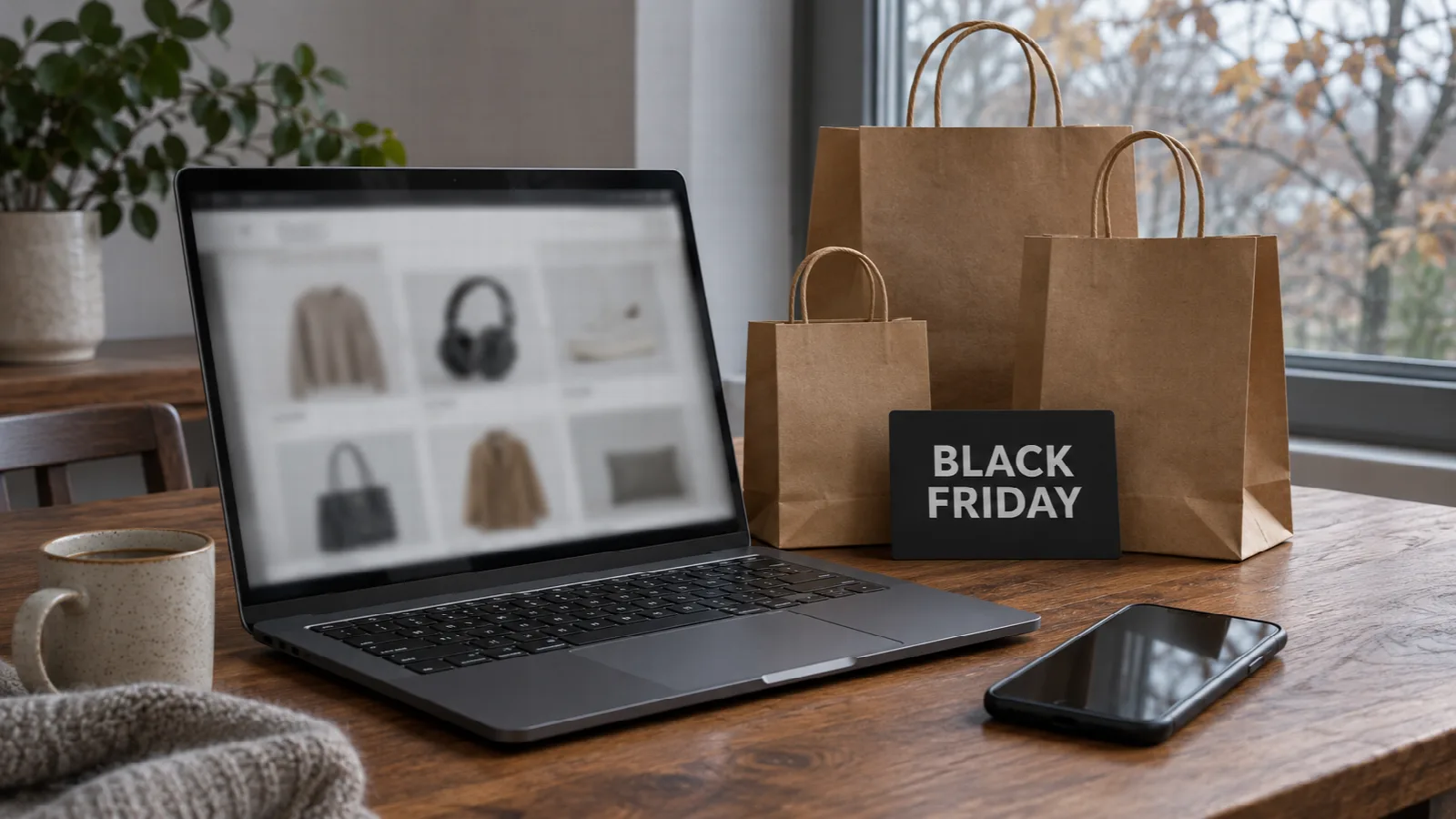
Black Friday 2026 falls on 27 November. With it comes the familiar discussion about genuine offers, misleading discounts and purchases made in a rush of enthusiasm. ERT has gathered the points consumers should watch out for.
Something slightly different concerns me: how much of the decision to buy is really our own?
I work with online shops. Product presentation, button placement and an easy checkout are part of my everyday work. Technology can help someone find what they are looking for. But it can also leave them with a constant feeling that they will miss out if they do not buy now.
“Offer ends soon.” “Only two left.” “Add something else for free delivery.”
Each of these pieces of information can be true and useful. The question is what happens when they all appear on the same screen. Somewhere along the way, you stop thinking about whether you need the product and start wondering whether you will catch the offer in time.
Urgency takes the place of choice.
I see nothing wrong with waiting for a sale. If you need a computer, have been following its price and find it cheaper, there is a real benefit. And a shop has every reason to make a good offer to attract customers.
The difference lies in where the purchase began: with a need you already had, or with a notification that appeared ten minutes ago?
A product that normally costs a hundred euros and that you buy for seventy might save you thirty euros. But if you did not want it before seeing the discount, it is worth asking whether you simply spent seventy.
The same applies to free delivery. Adding something you would have bought anyway can be useful. If you add an unnecessary fifteen-euro product to avoid three euros in delivery charges, the word “free” has started costing you money.
Before buying, I would keep four simple questions in mind:
- Did I want this before seeing the offer?
- Do I know what it cost over the previous few weeks?
- What will I pay in total, including delivery and any additional charges?
- If I closed the page now, would I look for it again tomorrow?
The last question seems the most useful to me. Some purchases can withstand a night’s thought. Others exist only while the button is flashing.
We do not need to treat every online shop with suspicion. But we do need room to decide. As someone who works on these systems, I believe good work shows here too: in clear information, the actual price, and the trust that remains after the order.
Before wondering how much we will save this Black Friday, let us remember what we wanted to buy before the adverts started.
The article’s cover image was created with AI.