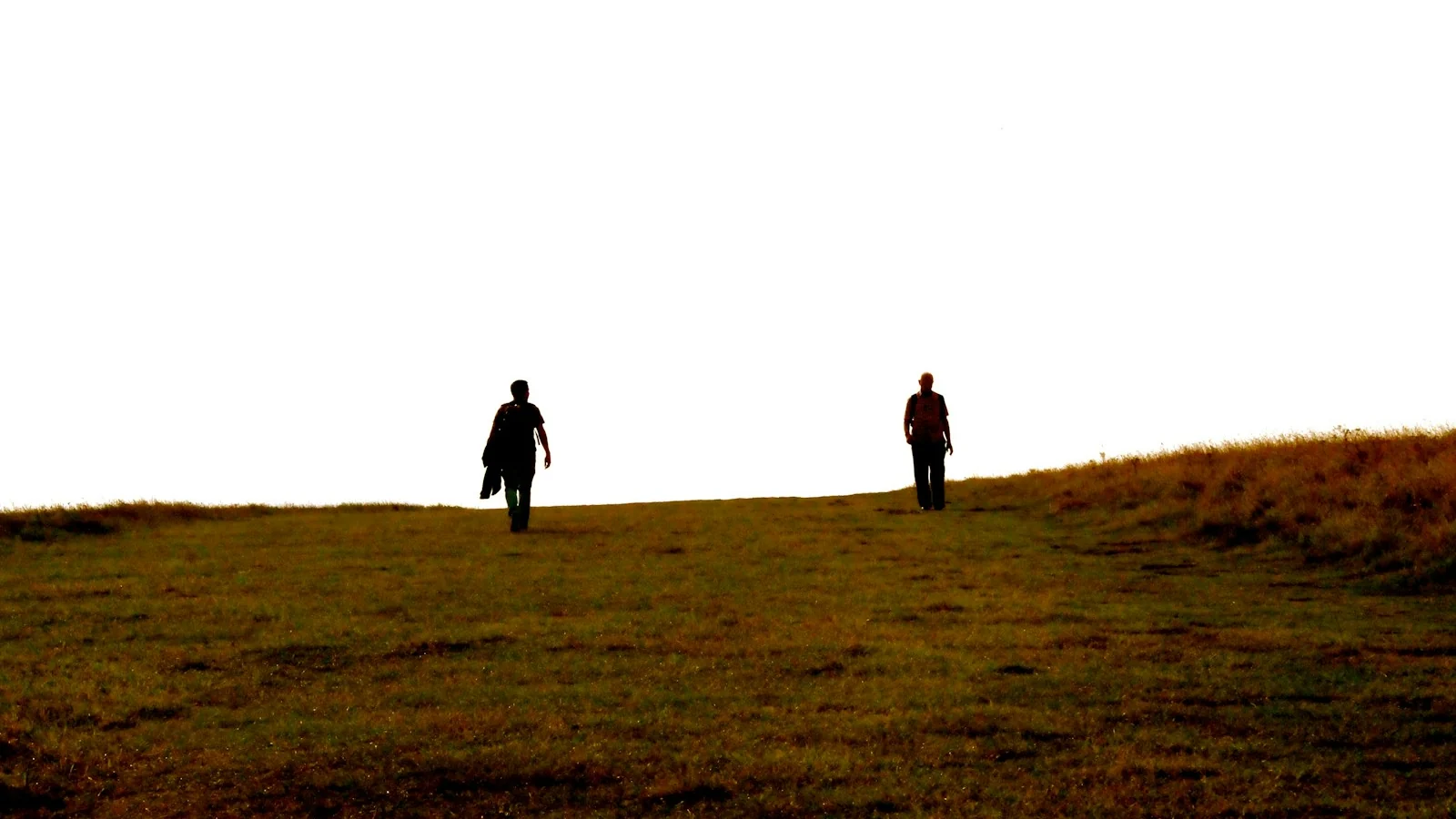
Two people who once knew each other well pass on the street.
One sees the other from a distance. Both of them, at exactly the same moment, find something very interesting to look at somewhere else.
It isn't awkwardness. It's an agreement.
Without a word, both decide there will be no hello. And they keep walking.
And usually there was never a falling out
That's the strange thing about relationships that fade: there is no moment anyone can point to.
Nothing was said that couldn't be taken back. There was no betrayal, not even a misunderstanding. Ask either of them what happened and neither has anything specific to say.
At some stage the messages thinned out. Then they became reactions to stories. Then nothing.
Nobody decided it. It happened on its own, and it was allowed to.
The exact moment someone becomes a stranger
There is a point that isn't visible from the inside.
It is the moment of the thought "I should message him", immediately followed by the thought "and what is there to say now, after all this time". The message doesn't get sent.
That second thought is the entire story. It isn't a lack of willingness. It's that the silence has gathered weight, and breaking it now feels like an event rather than a message.
The longer it goes, the heavier it gets. And one day the two pass each other and both study the shop window.
After covid, something was never unlearned
This isn't just an impression.
The European Commission measured loneliness in Europe in 2016, and again in the first months of the pandemic. The share of people who felt lonely frequently doubled. And in the large 2022 survey, with more than 25,000 respondents, roughly one in eight Europeans felt lonely most or all of the time — with Greece among the four countries with the highest rates.
For two years work happened at home. Shopping arrived at the door. Friends became calls, and then not even calls.
The pandemic taught something very practical: that a person can go weeks without seeing anyone and absolutely nothing bad happens.
And when everything opened again, not everyone came back. For some, the distance had turned out to suit them.
The impression of contact
The insidious part is that it doesn't feel like a loss.
One knows where the other went on holiday. Saw that they changed jobs. Tapped a heart on the photo with the baby.
The phone delivers all the information of a relationship and none of the relationship. And because the information is there, no alarm goes off. Nobody is missed — there is simply no longer anybody there.
It isn't malice, it's cost
The explanation doesn't have to be psychological.
Not saying hello costs nothing. It has no consequence, nobody asks for an explanation, nothing breaks in that moment.
The other option — the greeting, the awkward message — carries a small but real cost: the chance of no reply.
Between something that costs zero and something that costs a little, zero wins by itself, every time, without anyone deciding.
The relationships that last
There is one thing in common among friendships that survive time, and it isn't closeness or shared interests.
It is that someone made the first move once the silence had gone on long enough. Sent the awkward message. Said "it's been a while" without turning it into a complaint.
In every relationship that lasted, someone agreed to be the first one visibly missing the other.
The half second
An article doesn't change how people live, and doesn't attempt to.
It is worth saying, though, that the half second in which the gaze moves away is a decision, even when it doesn't feel like one. And that the other option — a hello — costs exactly the same half second.
The worst that can happen is no reply.
The best is two people stopping for five minutes on the pavement to remember why they were friends.
Source: European Commission, Joint Research Centre — EU Loneliness Survey 2022. Photo: Marta Esteban Fernando / Unsplash.