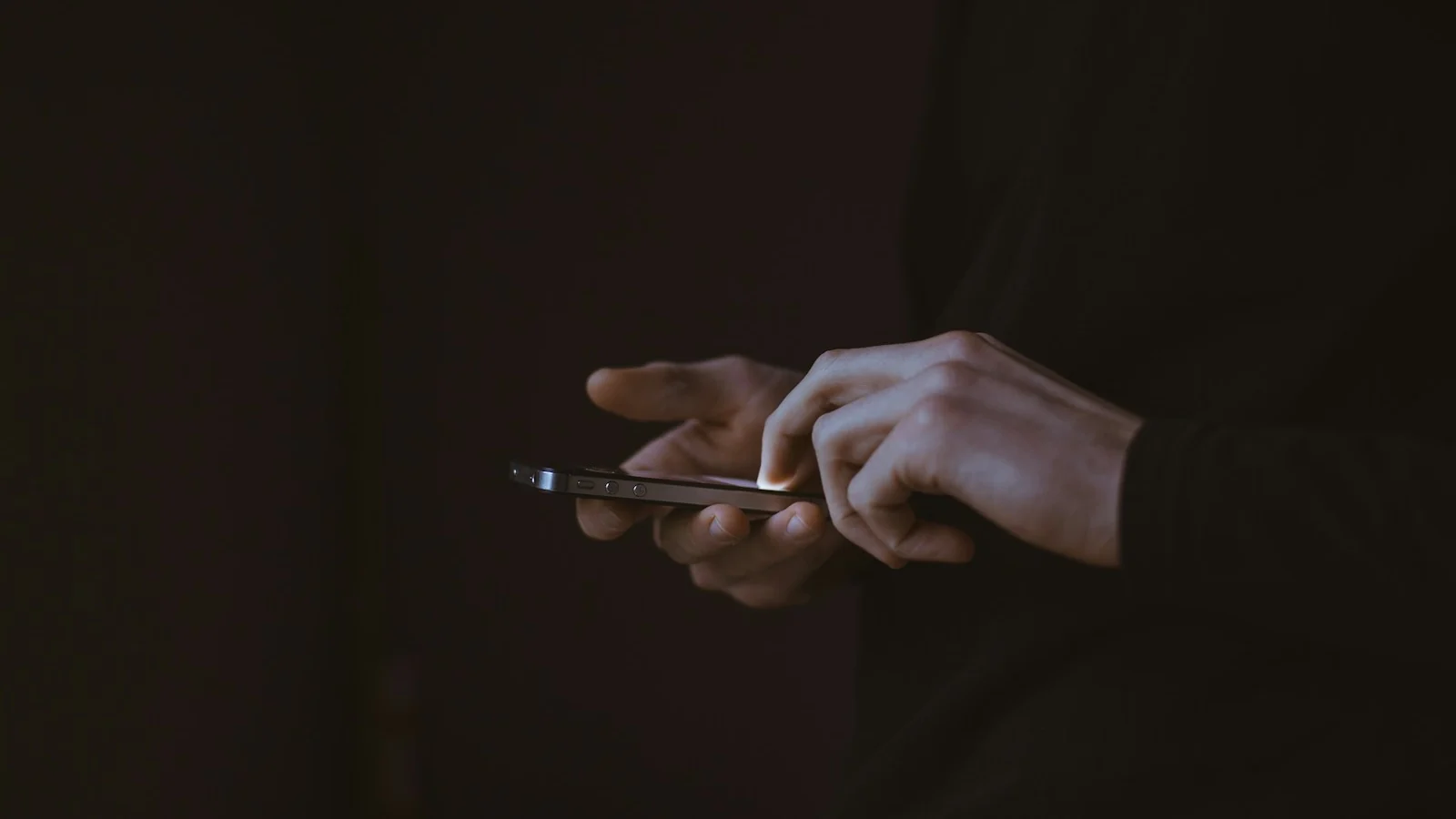
Someone sees a photo. They like it. The thumb moves towards the heart.
And stops.
Not because they changed their mind about the photo — because they had time to think about who would see it.
A look erases itself, a like stays
Outside, attention is perishable. You look at someone and the look ends there. It isn't recorded, it isn't forwarded, it doesn't surface in an argument three months later. And if anyone asks, there is always "I wasn't looking".
A like isn't a look. It's a signature. It has a name, it has a timestamp, it arrives as a notification — a message that was sent, not a glance that was given. And it stays there.
Anything that leaves a record can later be produced as evidence.
And it explains nothing
In 2009, when Facebook was still new, three researchers asked 308 people about jealousy and social networks. The finding wasn't that people see things they shouldn't — it was that they see things that don't explain themselves.
A like says something happened. It doesn't say what. Whether the other person came across the photo or went looking for it, whether they thought anything at all.
And ambiguity doesn't sit still: it asks to be interpreted, and interpretation asks for more checking.
Why silence wins
A like costs nothing to give. It can cost quite a lot to explain. Zero benefit, small but real risk — the rational answer is not to do it.
And here is the strange part: the fewer people react, the more anyone who does stands out.
On a photo with three hundred likes, one more means nothing. On one with six, it means something. The silence of the many loaded the act of the few with meaning — and that is how a tap became a pass.
What gets lost
For a while the like was the cheapest message ever built: I saw you, I'm still here, we don't need to say anything. The digital version of a nod on the street — and it worked precisely because it didn't mean anything heavy.
The moment it started to mean something, it stopped being useful.
So "how did we get here" probably isn't answered by "people became suspicious". Attention stopped being perishable. Once something is recorded it can be used; and once it can be used, it stops being given.
That second of hesitation in the thumb is neither politeness nor shyness. It is somebody pricing risk — over a heart.
Source: Muise, Christofides & Desmarais, "More Information than You Ever Wanted", CyberPsychology & Behavior (2009).