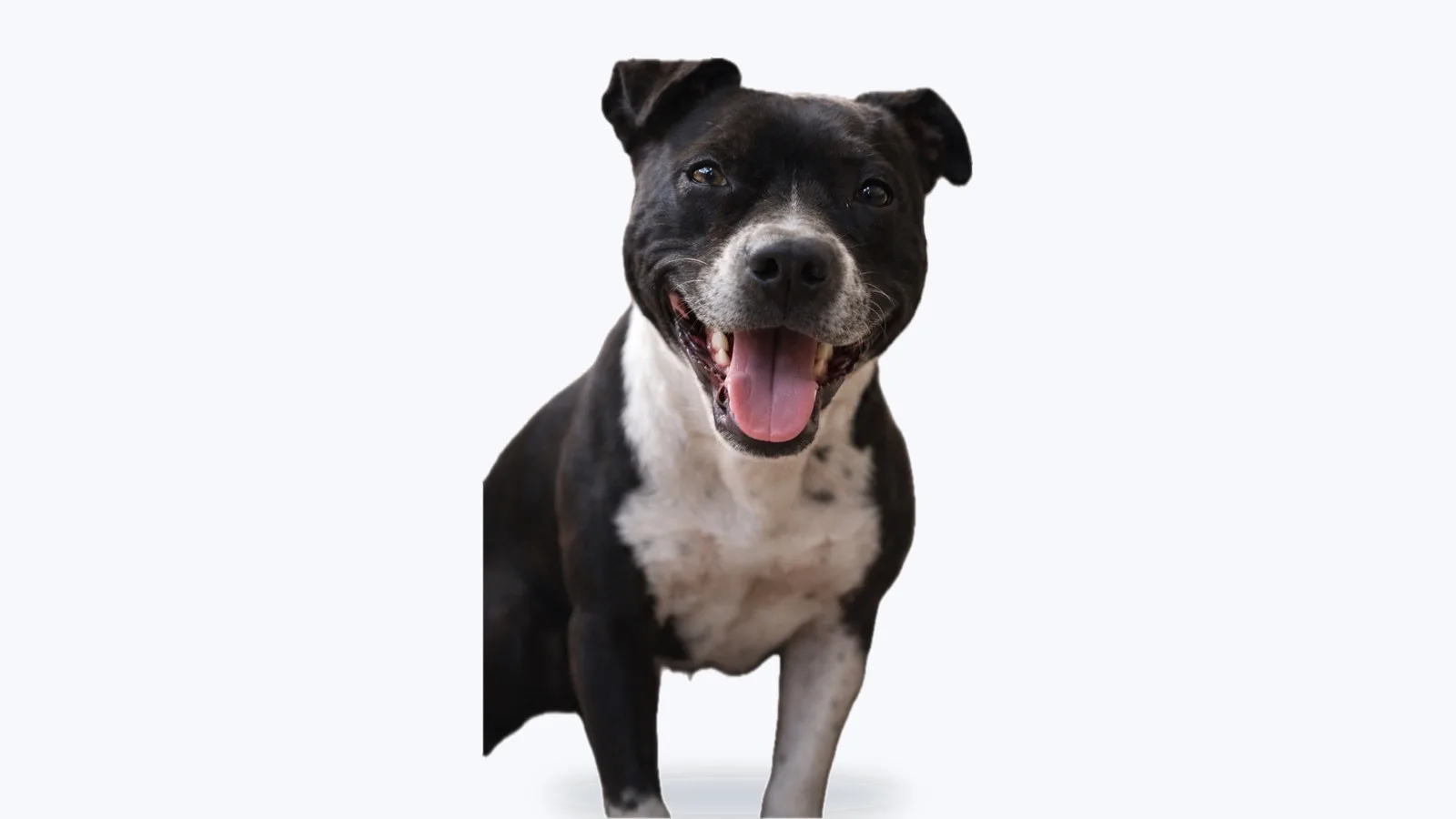
It no longer bothers me. I even understand it. What bothers me is something else: anyone who wants to learn what this breed actually is has nowhere to look in Greek.
I searched. You will find a pet shop blog, a product page and Wikipedia. For an animal that generates so much discussion, that is absurdly little.
So let us do this properly. Using the standard, rather than my opinion.
There is a standard. Hardly anyone reads it
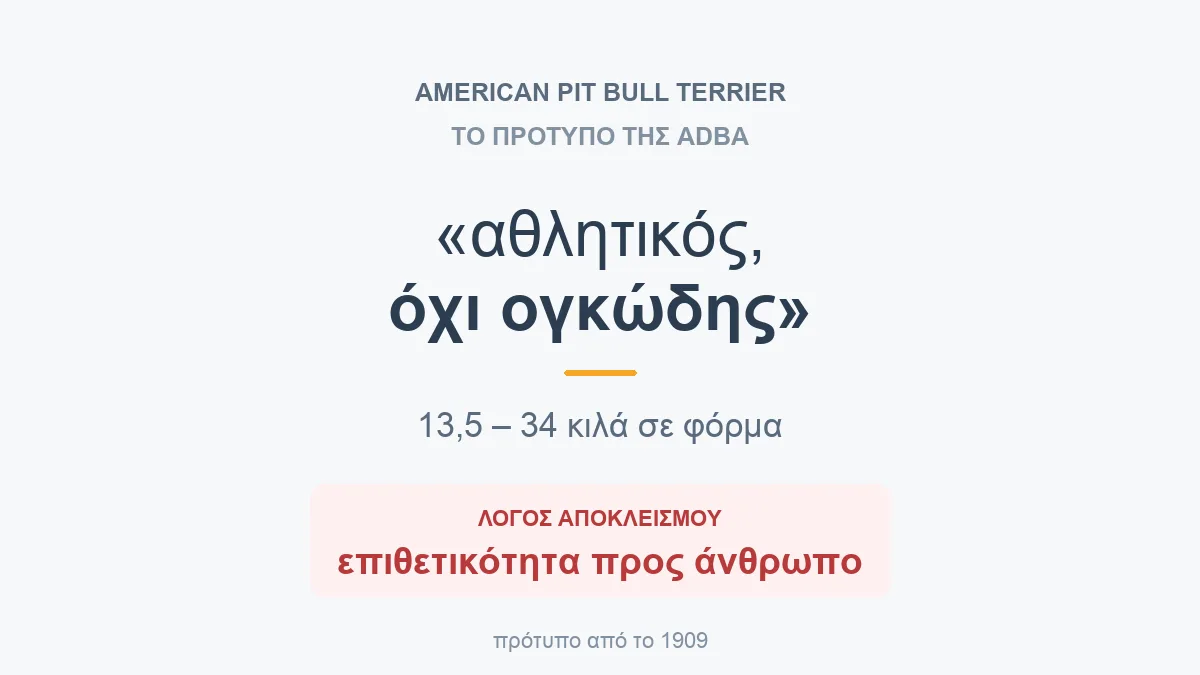
The ADBA — American Dog Breeders Association — was founded in September 1909 by two breeders, Guy McCord and Con Feeley. It is the oldest organisation devoted exclusively to this breed, founded at a time when other registries avoided it because of its past.
In 1976, the ADBA wrote its own standard. It did not adopt an existing one. And that standard says things very different from the image most people have in mind.
It says the dog should look like an athlete in every respect: speed, power, agility, stamina, and a balance between them all. Then it adds the phrase that should appear in every Greek article about the breed:
The dog should look athletic, not bulky. Its musculature should be smooth but clearly defined.
According to the standard, the ideal weight in fit condition is 30 to 75 pounds, approximately 13.5 to 34 kilograms. And the criterion is not even weight itself: the ADBA rewards the tallest dog for a given weight. Proportion, in other words, rather than bulk.
In plain terms: the standard rewards a functional dog. Not an imposing one.
The detail that changes the whole discussion
The same standard includes a list of disqualifications. Not a “fault”: disqualification. The dog is not even judged.
First on the list: aggression towards people.
Let that sink in for a moment. The organisation that has kept this breed’s pedigrees since 1909 considers a dog showing aggression towards a person to have no place in the ring. At the other end, a shy or fearful animal is listed among serious faults. The standard calls for a dog that is confident, alert and affectionate with its people.
So the claim that “this breed is made to attack people” is more than unfair. It is the exact opposite of what the official standard says. And it has said so for fifty years, publicly, in a document anyone can read.
The ADBA also organises sporting events: weight pulling, running, wall climbing and lure coursing. That is where these dogs channel their energy when someone works with them properly.
So what are the dogs we see in the street?
This is where it gets interesting. If you take the standard and look at most dogs called “pit bulls” in Greece, most do not meet it.
The bulky, heavy dogs with enormous heads, weighing 45–50 kilograms, that you see in photographs? Based on the above, those are not American Pit Bull Terriers conforming to the standard. They are other dogs, usually American Bullies or crosses, sold under the same name because the name sells.
And that brings us to an absurd situation: in Greece, a breed is judged mainly by dogs that are not even that breed.
It works the other way too. When someone asks what kind of dog she is and I tell them, I see the surprise: they expected something twice the size. Yzma is medium-sized. Indoors, she is one of the quietest creatures I have ever lived with: she sleeps, and sleeps a lot. The energetic side comes out outdoors, all at once.
And the persistent myth: her jaw does not “lock”. No dog breed has such a mechanism. Someone said it once, it sounded frightening, and it has been repeated for decades without anyone checking.
What someone selling you a puppy will not tell you
I will be honest here, because anything else harms the breed too.
This is a powerful animal. It is not a breed for someone who wants a dog “just to have one”. It needs someone who will be consistent every day, not just when they feel like it. It needs exercise, early socialisation, and someone who understands that a powerful dog with a disengaged owner is a problem, regardless of breed.
Also: the standard discusses aggression towards people. It does not say that every such dog will love every other dog. These are two different things, and confusing them is the easiest way to find yourself in trouble.
“It is all in how you raise them” is an oversimplification. Upbringing matters enormously, but every dog also has its own temperament. Anyone telling you breed plays no role at all is telling you what you want to hear.
The right answer is more boring: a wonderful dog for the right person, and the wrong choice for the wrong person. Like any powerful breed.
Now the part that concerns every dog owner
Not many people know this, and it is not just about pit bulls. It concerns everyone.
Under Law 4830/2021, if you own a dog in Greece:
- It must be electronically identified with a microchip and registered in the National Companion Animal Registry.
- If you do not neuter it, you must submit a genetic material sample (DNA) to the storage laboratory.
- The fee is a one-off €150 per animal, for storage lasting at least 12 years, plus up to €10 in shipping costs payable to the vet.
- If you do neither, the fine is €1,000, with three months to comply.
- Fines have applied since 1 July 2025. This is not a future scenario.
The purpose of DNA collection is identification in cases of abandonment and poisoning. It is a good reason. Many people simply do not know the requirement is already in force.
Why I write about this
Because discussion about pit bulls in Greece happens almost exclusively after an incident. Everyone speaks then, with maximum intensity and minimum information, before the discussion fades until the next one.
Between incidents, nobody writes anything. There is no boring, useful article explaining what the breed is, what the standard says, what the law says, and where to find reliable pedigree information.
That is why I am building something at apbt.gr: a structured pedigree database, because that is where reliable information about any breed begins. Without ancestry, “it is purebred” is just something said over the phone. It is not ready yet. But it is what I wish had existed when I was looking.
What I cannot prove
To be fair: the ADBA standard is one standard, from one registry. Others exist, with different details. I am not telling you it is the absolute definition of the breed.
I am saying it is the oldest and most specific document about this breed, that it is public, and that hardly anyone in Greece has read it: neither those attacking the breed nor many of those defending it.
I am also neither a vet nor a trainer. I am someone who owns one of these dogs and took the trouble to read the sources.
Yzma
That is her in the photograph at the top. She was named after the animated character, and the name suits her more than I would like to admit.
She sleeps on the sofa in anatomically inexplicable positions. She knows exactly when I pick up my keys. And she has no idea people cross the street because of her, which, if you think about it, is the gentlest part of this whole story.
If you have one too, are thinking about getting one, or simply read this far because you were interested, write to me. It is one of the subjects I never tire of.
Sources: ADBA — Heritage American Pit Bull Terrier Conformation Standard, Law 4830/2021 on companion animals.