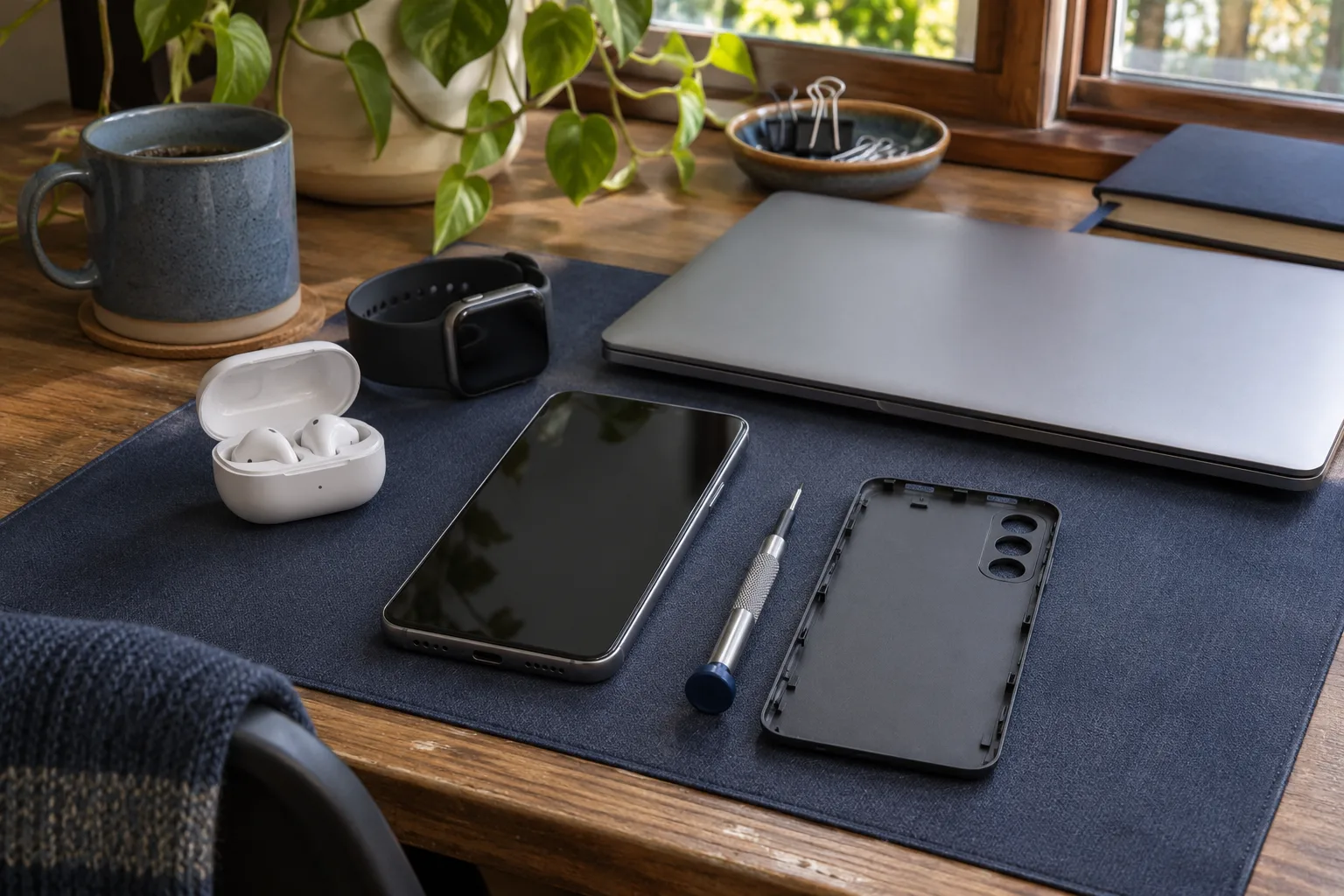
Almost without noticing, you have built a large part of your daily life around one company. In a sense, you become a subscriber to its ecosystem. Buying a device does not automatically enrol you in paid services, but the commitment can begin long before the first monthly charge.
When an ecosystem becomes an identity
Convenience has value. When devices communicate and your files are available everywhere, you save time. I fully understand why someone would want that experience.
Gradually, though, you may start defending the company as if you were defending yourself. Criticism of a product feels personal. The next purchase is decided before you compare alternatives. The logo becomes part of the image you want to present.
At that point, the relationship changes. Through purchases, recommendations and the way you present your devices, you also help promote the company. You may become its advertisement without realising it. I am interested in the point where a preference for a brand starts shaping our personal identity.
Yes, I fell into the same trap
I bought an iPod, an iPhone, a watch and a MacBook. I ended up using more and more products from the same ecosystem, until I began to feel trapped. I eventually started selling them because that sense of being tied in did not suit me.
That is my own experience. Someone else may use exactly the same products and be completely happy. What bothered me was that, whenever I considered a different option, I had to account for everything I had already connected.
Changing phones stopped being just a change of phone. Habits, accessories, files and the time needed to set everything up again all came into it. That is the cost of leaving an ecosystem: it is paid in effort as well as money.
How much control do I have over a device I paid for?
For me, the question is simple: how many decisions can I make myself after buying a device?
Can I choose different apps? Install another operating system, if a suitable option exists for my model? Move my data to another service? Have the device repaired by a technician of my choice?
On an iPhone, for example, many built-in apps can now be deleted, while some options vary by region. Apple explains this in its own instructions. Removing apps, however, does not amount to freely choosing or modifying the operating system.
Likewise, a battery can be replaced without buying a new phone. The meaningful question is how affordable and practical the repair is: parts, tools, labour and any software requirements.
Apple offers Self Service Repair for experienced users, with availability depending on the model and region. Supported repairs also use Repair Assistant to finish repairs and calibrate parts. These options evolve, so it is worth checking the particular model we are buying.
What the FSF and iFixit stand for
The Free Software Foundation — FSF approaches the issue from the software side. Free software gives users the freedom to run it, study how it works, modify it and share copies and changes. Here, “free” refers to user control and freedoms, rather than price.
This does not mean every Android phone is automatically free software. Through LibrePhone, the FSF itself is tackling proprietary software components that remain in phones even when other parts are free software.
iFixit and the Right to Repair movement focus on repair: access to parts, tools, manuals and the software functions needed to complete the work. They highlight barriers such as glued-in batteries and restrictions that pair particular parts with a device.
I do not need to open my own phone for this to matter to me. I want repair options and people who can maintain it, so that an ordinary fault does not become a reason to buy another device.
I want to stay because I choose to
The Apple example is personal, but the question applies to any company that connects devices, accounts, purchases and services into an ecosystem.
Before my next purchase, I also want to consider the exit: what happens if I change my mind? Can I take my data with me? Will my accessories work with other options? Will parts be available when I need them?
A company can offer attractive and useful products. My personal identity, though, belongs to me. I want to remain a customer because my choice serves me, with a real ability to change it.
That is what I expect from the technology I buy: room to make decisions about my own life.
Related: GrapheneOS and control over your phone · When admiration becomes imitation.
Article illustration: generated with AI.