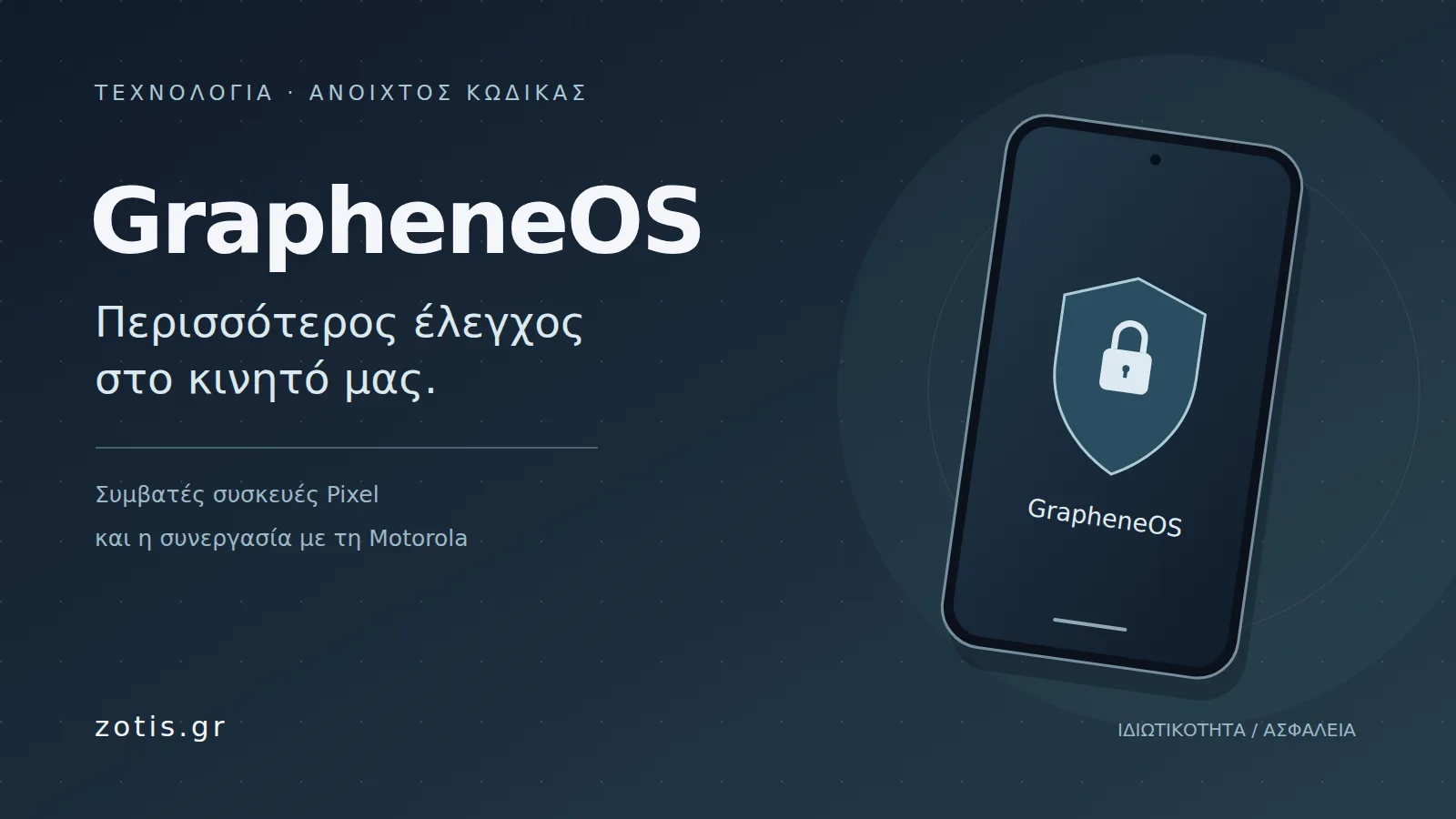
Those questions make GrapheneOS interesting to me. I care about operating systems and open source, particularly when an alternative is backed by concrete engineering. It is worth looking at what this one offers, which devices can run it and what the Motorola partnership changes.
What is GrapheneOS?
GrapheneOS is an independent, nonprofit open-source mobile operating system focused on privacy and security. It builds on the Android Open Source Project and retains Android app compatibility.
It replaces the factory operating system. It is not an app or a different visual theme. Much of its value comes from the engineering beneath the interface.
What changes in everyday use?
Its features include additional exploit mitigations and stronger application isolation. Practical controls let users deny an app network access, restrict sensors and limit which contacts or files an app can access.
For me, that brings the decision back to a useful question: what access does an app need for the job I want it to do? I want understandable controls that help me make that choice.
Google services are not preinstalled. The optional sandboxed Google Play feature runs the official Google Play apps as regular sandboxed applications, without privileged system access. This helps apps that depend on those services.
Compatibility still needs checking, particularly for banking and payment services. The project’s usage guide explains the limitations. I would check my essential apps before changing the operating system on my main phone.
Which devices support GrapheneOS today?
As checked on 9 November 2026, the official releases page provides builds for:
- Pixel 10: Pixel 10, Pixel 10 Pro, Pixel 10 Pro XL, Pixel 10 Pro Fold, Pixel 10a.
- Pixel 9: Pixel 9, Pixel 9 Pro, Pixel 9 Pro XL, Pixel 9 Pro Fold, Pixel 9a.
- Pixel 8: Pixel 8, Pixel 8 Pro, Pixel 8a.
- Pixel 7: Pixel 7, Pixel 7 Pro, Pixel 7a.
- Pixel 6: Pixel 6, Pixel 6 Pro, Pixel 6a.
- Also: the original Pixel Fold and the Pixel Tablet, which is a tablet.
Build availability must be read alongside the remaining support period. Pixel 6 and Pixel 6 Pro reached their minimum guaranteed manufacturer support date in October 2026. Temporary extended-support releases, when provided, cannot replace full firmware and driver security updates. The official FAQ explains the distinction.
Bootloader unlocking must be allowed; some carrier variants prohibit it. I would check the exact model and remaining support before buying.
How installation works
The official web installer connects to a compatible device over USB. The process includes unlocking the bootloader, installing the OS and locking the bootloader again. It wipes user data, so a backup comes first. Follow the current official instructions for your device.
I would take time to prepare. Changing an operating system makes sense when you understand the benefits and have checked what everyday use requires. Privacy should remain practical.
The GrapheneOS and Motorola partnership is official
On 2 March 2026, the team announced its long-term Motorola partnership. Motorola confirmed that it covers future devices engineered for GrapheneOS compatibility and joint security work.
There is now a named device: the motorola signature 27. In its official announcement, Motorola identifies it as its first device to support GrapheneOS and describes hardware support for Memory Tagging Extension, a technology that helps address certain memory-safety errors.
A device announcement does not establish that a GrapheneOS release is already available. When checked for this article, the Signature 27 was absent from the official list of available builds. We are waiting for the official release and installation guidance. This does not establish support for older Motorola phones.
Maintenance matters too. The GrapheneOS team explains that Motorola will provide it with at least monthly firmware and driver updates. That is more meaningful to me than a broad promise of a secure phone.
What I want to see in practice
I want an open-source project to gain more practical hardware choices and better cooperation with the manufacturer. I will be looking at stability, update consistency, straightforward installation and how comfortably the result supports everyday use.
I do not expect an operating system to promise absolute security or anonymity. Our app choices and the information we share still matter. But I welcome options that take the user’s control over their own device seriously.
That is what I am waiting to see from Motorola: a partnership judged by the phone someone can actually use. Open source becomes more interesting when that freedom of choice works comfortably in daily life.