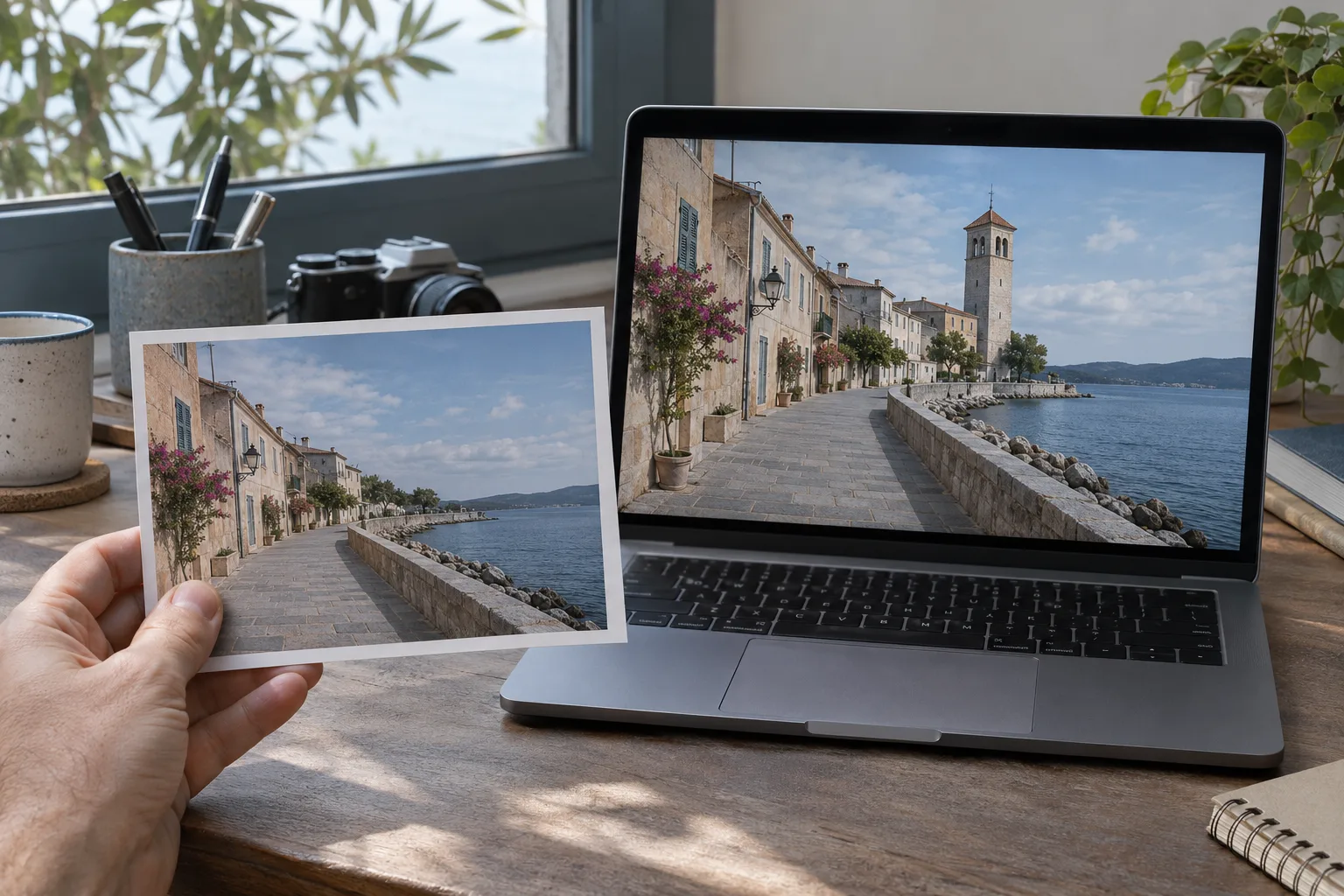
Of course, image editing has existed for years. Today, however, creating a convincing, entirely fabricated scene has become much more accessible.
You can change a person’s clothes, place them somewhere else, or create an image of an event that never happened. As those images appear alongside real photographs, visitors often do not know exactly what they are looking at.
Images create expectations
AI offers many creative possibilities. It can help illustrate an idea, present a design or improve an old photograph.
How the image is used, however, matters.
A digital rendering of a future hotel helps us understand a design. If it is presented as a photograph of the accommodation as it exists today, it creates a different expectation for the visitor.
The same applies to a product, a professional workspace or an image accompanying a news story. The person viewing it may use it to decide what to buy, whom to trust or what to believe.
Discussion about transparency in AI-generated content is now also at the centre of European initiatives. European Commission
A little more care before sharing
For readers, the most useful habit is to look beyond the image itself.
Who published it? Is there an original source? Does it come with a specific date and location? Is the event also confirmed by independent sources?
The absence of these details does not prove that a photograph is fake. It is, however, a reason to pause before treating it as evidence.
As someone publishing an image, I consider it important to give others the context they need. A simple explanation of how an image was created or modified can prevent a misunderstanding.
Personally, I want technology to help us express ourselves and communicate better. Trust remains a fundamental part of that communication.
And the easier it becomes to create a perfect image, the more valuable the honesty of the person sharing it becomes.
Article illustration: generated with AI.