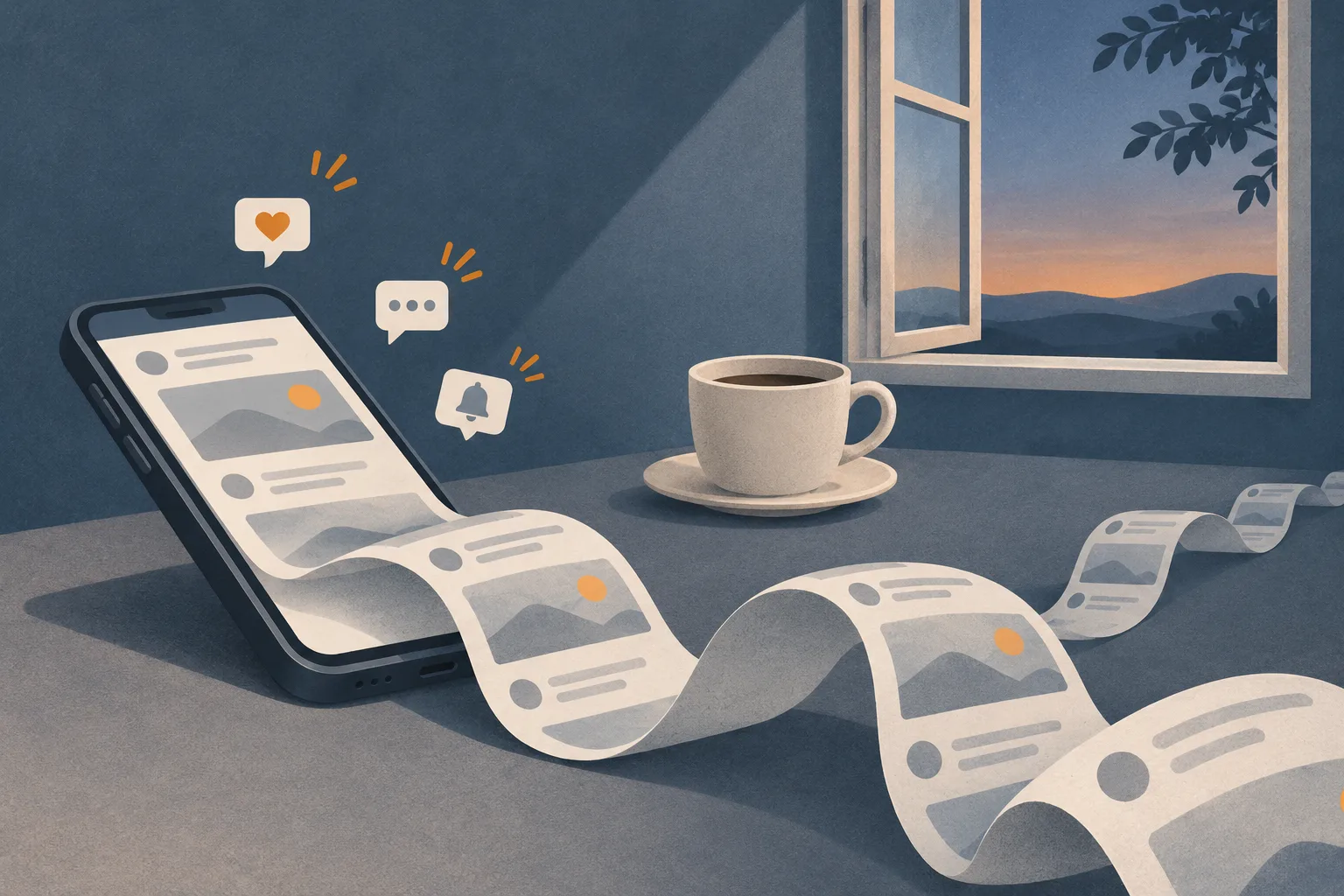
I increasingly feel that social media have lost much of what made them interesting. The sense of spending time with people has given way to advertising, self-promotion and content that seems designed exclusively to keep you looking.
LinkedIn and Facebook: the company and the content have changed
For me, LinkedIn has drifted away from its professional purpose. Among useful contacts and genuine opportunities are success stories that sound alike, ready-made inspiration and people presenting every everyday action as a major business lesson. I would like more practical work, more expertise and less performance.
Facebook feels more like the old online crowd that grew older alongside it. Local groups still have value: you can find people in your area and useful information. The main feed, however, often feels like a recycling loop of posts, arguments and advertising.
The age picture needs care. In Pew Research Center’s 2025 US survey, Facebook remains widely used across several age groups, while Instagram and TikTok have a stronger presence among younger adults. These figures describe the United States and are not a measurement of Greece.
Instagram: when the display window becomes a habit
What tires me about Instagram is the constant exposure to the “best version” of everything. Better bodies, better holidays, better jobs, better lives. For a young person still developing their sense of self, that comparison can become a source of pressure.
Many of us who grew up with these platforms have become accustomed to watching more and sharing less. You see other people’s lives, move on and keep going. Participation becomes a habit of consumption, and eventually boredom sets in.
That does not describe every young user. Pew’s 2026 research among US teenagers records positive experiences of entertainment and connection alongside difficulties involving screen time, sleep and harassment. The pressure deserves discussion without treating an entire generation as though everyone has the same experience.
YouTube and TikTok: more video, less patience
On YouTube, I am bothered by repetitive AI-produced content: similar scripts, synthetic voices and changing images that add little. I use AI tools too. I still expect someone to have worked on the idea, checked what they say and taken responsibility for the result.
The percentage matters: Kapwing identified 104 videos it classified as low-quality AI content among 500 Shorts recommended to a new account, roughly 21%. This was a specific sample of recommendations, rather than a count of all YouTube content. The research does not establish that “80% of YouTube is AI”.
On TikTok, I often feel as though I am flicking through an endless advertising catalogue in video form. Someone is promoting a product, someone a service, someone themselves. Even an interesting idea can disappear when dozens of variations follow it. You keep scrolling without much desire to stay with anything.
Where are people going?
There is no single app everyone is moving to. In fact, the Reuters Institute’s Digital News Report 2026 shows how powerful social and video platforms remain in news consumption. The fatigue I describe can coexist with continued use.
My own view is that more specific connections are becoming more valuable: a small group around a shared interest, a private conversation, a creator you choose to listen to at length, a podcast or a newsletter you open because you want to. The same applies to a personal blog when there is a reason to return to the person writing it.
These choices can exist alongside social media. You might discover someone through a short video and then want to read their thinking, ask a question or meet them in person. That is where a relationship starts to last longer than the next swipe.
That is why I want zotis.gr to reflect my own perspective and leave room for conversation, through things such as “Ask Zotis”. Somewhere you can read, disagree and find something that was worth your time.
For me, that is what will matter online from here on: knowing who is speaking and why I want to hear from them again.
A personal opinion article. Research is cited with its scope and limitations. The cover is a symbolic illustration created with AI.