When we hear the word “protest”, most of us picture the same thing: people in the street, banners, chants, a march towards a building.
It is a familiar form. We have watched it for years. And I increasingly wonder whether we have grown so used to the image that we forget to look for other ways to express disagreement.
Because I can also protest through a purchase I choose not to make. Work I withhold. A process I take part in alongside others. A habit I stop offering as something that can be taken for granted.
I am interested in ways of protesting that can stand on their own, without requiring us to join a march.
Stop buying
A boycott is perhaps the clearest example. We disagree with a particular company practice and collectively choose to stop funding that relationship.
We leave the product on the shelf. We do not renew the subscription. We choose another service.
Here, the protest appears in the transactions that are missing. To carry weight, it needs enough people, a clear demand and persistence. People also need to be able to live without what they are giving up, by finding a real alternative.
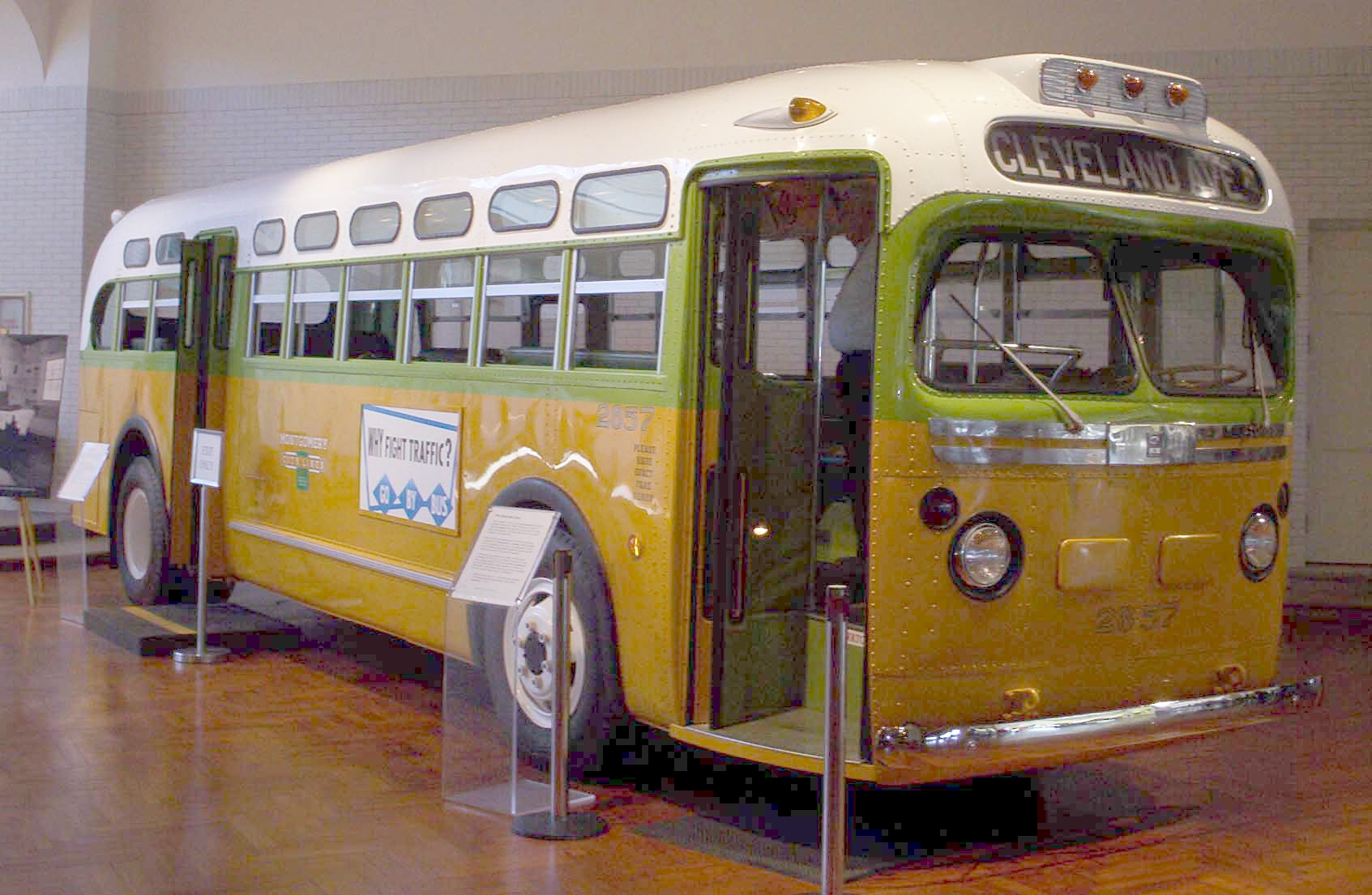
During the Montgomery bus boycott of 1955–1956, participants organised shared transport and continued to stay off the buses while a legal challenge was also under way. Changing their everyday behaviour was a central part of the pressure. National Park Service — Montgomery Bus Boycott.
That seems meaningful to me: knowing what we are asking for and which change would bring us back. The choice gains a direction.

Use administrative processes collectively
A different idea is to move the protest into the processes of the state. Many people could coordinate their use of a right normally exercised individually, creating a presence that reaches the office and the case file.
The idea of a mass name change belongs to that line of thought: an unusual shared request that would make a protest visible to the administration. I see it as an idea to examine, rather than an established method or a simple act without consequences for those taking part.
I would draw a line here. I want genuine, legitimate requests. Deliberately manufacturing work until a service collapses may leave the next citizen waiting. We need to consider that cost before choosing the action.
There are more substantive versions of the same collective approach: joint petitions about a real problem, documented objections where the process allows them, participation in consultations and citizens’ initiatives. The action takes place within the process, with shared substance and a specific demand.
The European Citizens’ Initiative is one such institutional route. If the signature requirements are met, the Commission must examine the initiative and respond, although it is not obliged to propose legislation. Collective participation gains a defined recipient and a response procedure. European Citizens’ Initiative — how it works.
Withhold our work together
An organised work stoppage can itself be the protest. It does not require everyone to gather on a street. The shared act is withholding work.
In Iceland in 1975, women withdrew from paid work and domestic duties. The absence of that everyday contribution made its weight visible. Icelandic Women’s History Archives — Women’s Day Off 1975.
The thought is simple: something functions every day because people make it function. When those people withdraw their labour collectively, their contribution becomes difficult to ignore.
The difficult part is organisation. Participants need to understand the applicable framework, there needs to be support for those losing income, and care for people who depend on critical services. The ability to protest needs to include someone who struggles to miss a day’s pay.
Withdraw our attention
Online, we offer something even when we are not paying: time, views, participation.
Coordinated withdrawal from a platform can become a form of protest against a particular policy. We can stop posting, move our conversations elsewhere and choose not to offer our daily presence there.
It is related to a boycott, with habit and attention at its centre. Its strength would depend on participation, duration and how essential the platform considers that particular community. There is no guarantee it will change anything.
But it has a consistency that interests me: my disagreement also shows in how I use the service. Of course, I need to have arranged another way to communicate with the people I want to keep close.
Make a shared gesture from our own space
A mass protest can also happen without a shared meeting point.
A common symbol on our balconies. A colour we choose to wear on a particular day. A coordinated symbolic gesture in our own space, carrying a clear message.
Here, participation is spread across the city. It can include people who find it difficult to travel, who care for someone, or who simply do not want to be in a crowd.
An action like this mainly creates visibility. On its own, I would not credit it with the power to overturn a decision. But it can make a shared position recognisable, without needing a march to show how many people hold it.
Choose where we want our disagreement to reach
This is what I look for in alternative forms of protest: a connection between what we do and what we want to change.
A purchase withheld reaches a company. Collective withdrawal makes work visible. Institutional participation puts a demand into a specific process. A shared symbolic act makes a position visible to the people around us.
Each of these approaches has limits and costs. They deserve consideration with a specific purpose in mind, rather than an assumption that every disagreement must take the same form.
We can also protest through what we collectively choose to buy, contribute, use or stop doing.