This question starts Ask Zotis: straightforward explanations of things we use every day. Let us look at where a website actually lives when we open it on a phone.
What is a server?
A server is a computer that serves other computers and phones over a network. For a website, it stores the files and runs the software needed for the site to work.
Imagine opening an online shop and tapping a product. In a simplified picture, your phone requests the page and the server sends back the information needed to display it: text, images and product details.
A server can be physical or virtual, operating as a separate computer within a larger physical machine. You may also hear “web server” used for the software that receives and answers visitors’ requests. MDN explains these two uses of the term.
What is web hosting?
Hosting is the service that provides your website with storage and computing resources on a server so people can access it online. Depending on the infrastructure, it can involve one server or several.
Think of a shop that needs premises, electricity and access for customers. Similarly, a website needs a computer, storage and an internet connection. A hosting service provides that infrastructure.
That is why there is a recurring charge: the infrastructure keeps operating after the website has been built. Support, management and backups may be included or charged separately, depending on the agreement. AWS describes the resources involved and the different features of hosting plans.
For an online shop, hosting goes alongside the software that supports the buying process. I have written about choosing between OpenCart and WooCommerce through my experience maintaining stores.
What is a domain name?
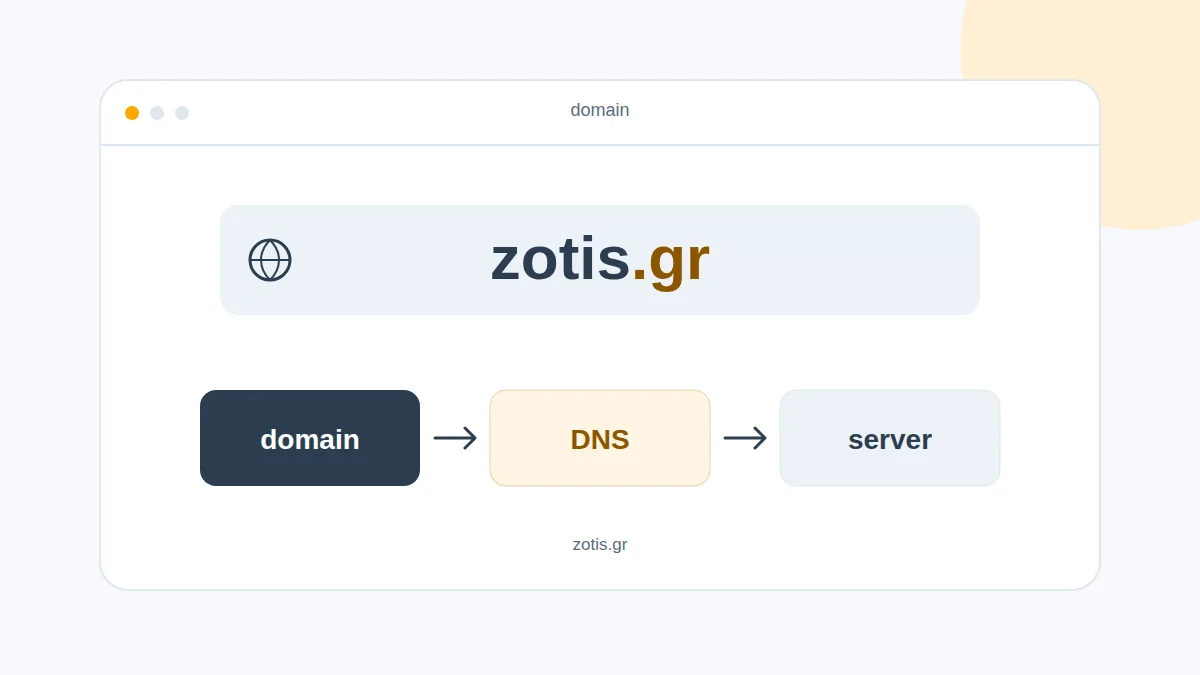
A domain is the name you enter to find a website, such as zotis.gr. The DNS system connects that memorable name with the technical addresses devices need to find the service. Cloudflare provides a more detailed explanation of DNS.
You might buy the domain and hosting from the same company and see them on the same invoice. They are still separate services. Registering a name alone does not build or host a website.
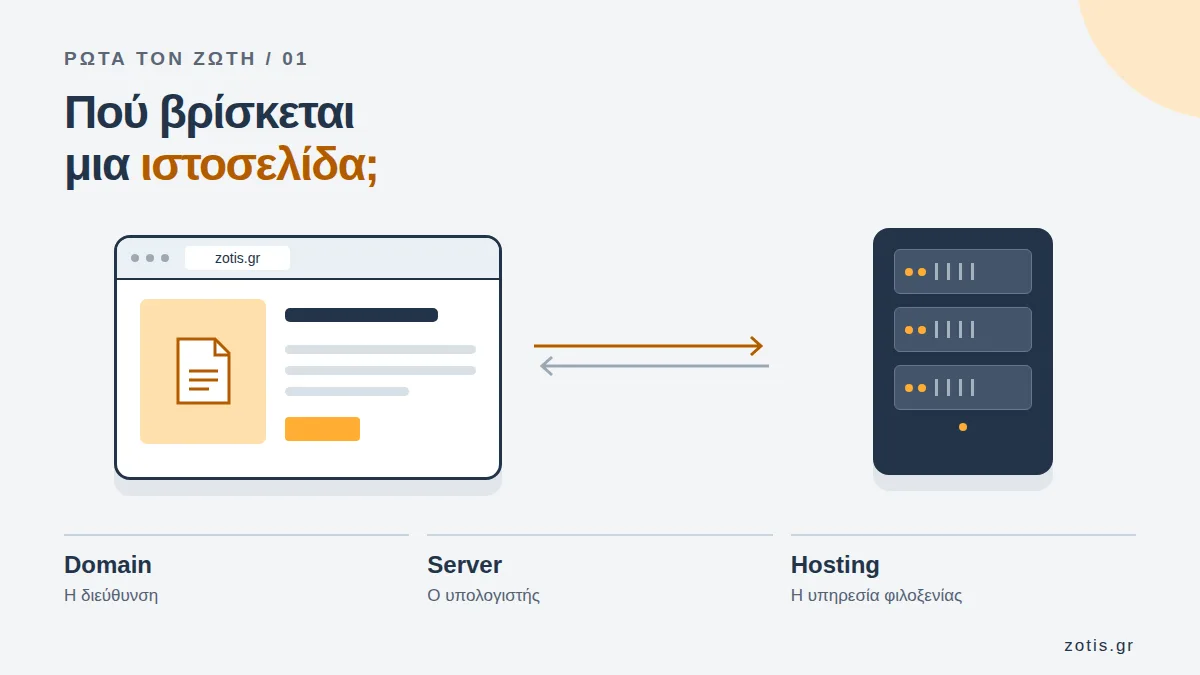
The domain is the address. The server is the computer serving the site. Hosting is the service that provides the infrastructure it needs.
Will my website close when I turn off my computer?
When a provider hosts your website, it operates independently of whether your own laptop is on. Visitors communicate with the hosting infrastructure.
The same principle applies when you hear “cloud”: the infrastructure still uses real computers. MDN describes how website files are published through a hosting service.
What should you ask before paying?
In my view, the useful thing is to understand what your agreement covers and who handles each responsibility. Four simple questions can start that conversation:
- What does the price include? Are hosting, domain renewal, business email and website maintenance covered together or separately?
- Are there backups? How often are they made, where are they kept, and who handles a restore?
- Who do I contact if something goes wrong? Who manages the server, and who fixes the website itself?
- What do I receive if I change providers? How do I retain control of my domain and transfer my files and data?
As someone who develops and maintains websites, I believe these explanations should be given from the start. Anyone paying for a service deserves to understand what they are buying and why they need it.
Looking for hosting for your website or online shop? At iRox.gr, we can handle hosting and technical support based on your project’s needs. Get in touch to discuss what you need and what the service includes.
Continue reading
Next guide · What is a web server and how does it work?
Have a similar question? Send it through Ask Zotis. It could become the next topic we explain in everyday language.